


Wild bees in the garden: 5 simple measures for more biodiversity
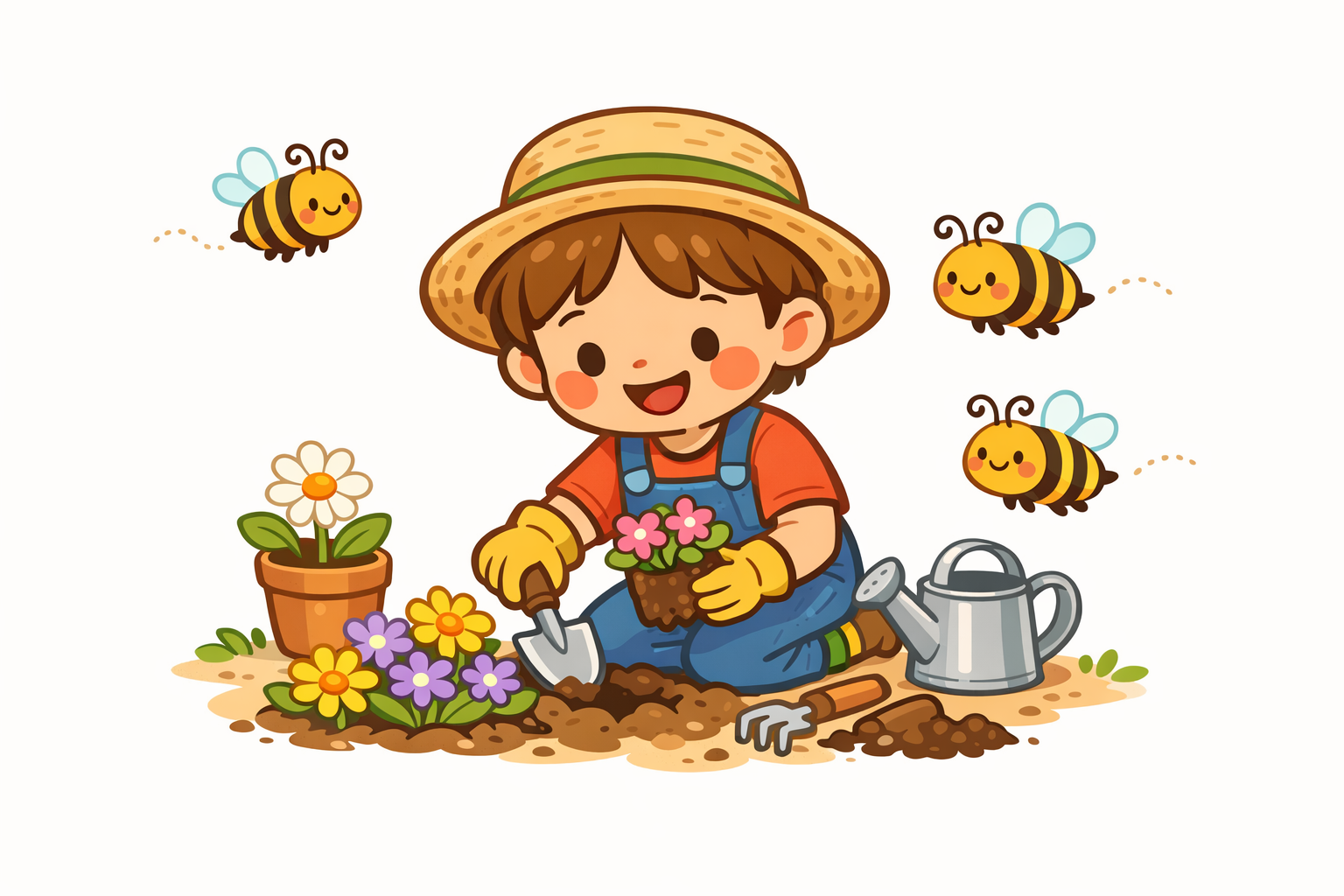
Many Swiss gardens are tidy, short and surprisingly quiet - wild bees hardly find any food or nesting places in them. At the same time, families want more nature on their doorstep without turning their garden into a wilderness. This guide shows you how to transform your garden step by step into a lively retreat for wild bees with five simple, child-friendly measures - adapted to the Swiss climate, space conditions and everyday life with children.
Table of contents ▼
- Why wild bees need your garden
- Measure 1: Colorful and continuously flowering plants
- Measure 2: Nesting aids and natural hiding places
- Measure 3: A small flower meadow instead of just a lawn
- Measure 4: Water and resting areas for wild bees
- Measure 5: Poison-free gardening with children
- Decision: How much "wilderness" can your garden tolerate?
- Typical mistakes - and how to avoid them
- Conclusion: Creating more habitat step by step
- Frequently asked questions about wild bees in the garden
- Focus on native, unfilled flowers from spring to fall instead of just lawns and ornamental shrubs.
- Provide suitable nesting sites for wild bees: Dead wood, pithy stems, sandy areas and high-quality nesting aids.
- Plan one or more "wild corners", while keeping play and seating areas tidy.
- Consistently refrain from using chemical poisons and explain to children why wild bees are welcome in the garden.
Why wild bees need your garden
Wild bees pollinate a large proportion of our fruit trees, berry bushes and wild plants - over 600 species live in Switzerland, many of which are highly endangered. In densely built-up residential areas, they lack structurally rich areas, flowers and nesting sites. Every family garden that offers a variety of flowers and islands of peace becomes an important stepping stone in a network of habitats and thus strengthens biodiversity on your own doorstep.
Unlike honey bees, most wild bees live solitary lives, i.e. without a colony. They are peaceful, avoid noise and hustle and bustle and can be easily combined with a child-friendly garden. Short distances between forage plants and nesting sites are crucial - usually only a few dozen meters. This is exactly where a typical terraced house or village garden can come in.
Measure 1: Colorful and continuously-flowering plants
For wild bees in the garden, continuous flowering from March to October is more important than individual "bee magnets". Go for native, unfilled flowers in perennial beds, raised beds and pots. Plan three flowering periods: spring (e.g. crocuses, saltwort), summer (e.g. meadow knapweed, thyme) and fall (e.g. autumn asters, stonecrop). This means that wild bees can almost always find food - even in small gardens or on terraces.
Start with areas that you want to replant anyway, such as a tired border strip or the edge of the sandpit. Combine robust perennials with herbs that are valuable both in the kitchen and for pollinators. Native species are usually easier to care for and better adapted to dry periods than exotic ornamental plants.
- Spring: Crocuses, snowdrops, primroses, wild tulips, willow in the shrub area
- Summer: meadow knapweed, viper's bugloss, bluebells, thyme, oregano, lavender
- Autumn: stonecrop, autumn asters, goldenrod (native species), ivy (late flowers)
- Avoid at all costs: heavily double flowers, as they usually offer no nectar/pollen
If you would like to take a closer look at plant selection, it is also worth taking a look at guides to bee-friendly plants, which present species suitable for different regions of Switzerland.
Measure 2: Nesting aids and natural hiding places
Wild bees need suitable nesting sites just as urgently as flowers. Around a third nest in the ground, others in hollow stems, old wood or cracks in walls. Instead of keeping the garden "clinically clean", deliberately leave selected areas untidy: a small pile of dead wood, pithy stems from the previous year, a sunny sandy area. Add a high-quality nesting aid to create a diverse range of habitats for different species.
Many cheap "insect hotels" remain unused or even cause damage because holes are frayed or unsuitable materials are used. Look for hardwood with clean drill holes (2-9 mm), reed tubes with smooth cut edges and a sunny location protected from the rain at a height of 1-2 m. Ground-dwelling species benefit from open, sandy areas without mulch or fleece.
In the fall, deliberately leave some of the shrub stems, piles of leaves and some dead wood standing. Cut back pithy stems (e.g. blackberries, thistles, coneflowers) at the end of winter and stack them loosely on a sunny section of fence - ideal nesting space for stem dwellers.
Place a good quality nesting aid on a quiet, sunny wall or at the back of a play tower - at least 1 m above the ground, protected from the weather and firmly screwed in place. Ensure that there is sufficient clearance and keep some distance from heavily frequented sitting and play areas.
Create a small, open area of ground: remove the turf, work in a mixture of sand and gravel and do not walk on it. A sunny edge next to the garden path is sufficient. Important: no Mulch, no plastic sheeting, no constant tilling - ground nesting birds need peace and quiet and bare earth.
Children in particular enjoy watching how more and more tubes are gradually closed or how small wild bees emerge from the soil. Communicate that the animals need peace and quiet and should not be touched - this creates respect instead of fear.
Measure 3: A small flower meadow instead of just a lawn
A species-rich flower meadow offers wild bees and other insects significantly more food than a short lawn. It does not have to take up the whole garden: Even a strip 1-2 m wide along the fence or an "island of meadow" replaces monotonous greenery with a colorful, buzzing ribbon. With regional wildflower seeds, a robust, low-maintenance biotope can be created within a few years.
A clear zoning makes sense for families: a short play area with a lawn or trampoline, next to a meadow area that children are more likely to observe than enter. This keeps the garden usable, while wild bees and butterflies benefit from nectar plants and structures.
Plan the conversion of a strip of lawn into a flower meadow in good time: in Switzerland, spring and early fall are particularly suitable for sowing. Thoroughly remove the turf, lean the soil (e.g. with sand) and sow a tested wildflower mixture. You can find step-by-step instructions specifically for Swiss conditions in a supplementary guide.
If you also use play equipment or wooden structures in the garden, you can integrate them visually into the near-natural areas: Meadow or shrub beds around the climbing tower make the area more exciting, as long as the direct ascent and descent is kept sure-footed and short.
Measure 4: Water and resting areas for wild bees
Wild bees also need water - directly or indirectly via moist soil and puddles. A shallow, bee-proof watering hole with stones or shards of clay gives them surefootedness and prevents drowning. At the same time, other beneficial insects benefit, which further strengthens biodiversity in the garden. Good hygiene is important: regular water changes and cleaning reduce the risk of disease.
Don't place water points directly next to heavily used seating areas or sandboxes, but slightly offset in a quiet, easily visible area. This way, children can watch the action without constantly being in the middle of air traffic. Ideally, combine the watering hole with flowering plants and a small, undisturbed corner in the background.
Measure 5: Poison-free gardening with children
Poison-free gardening is one of the most effective measures for increasing the number of wild bees in the garden. Insecticides and fungicides usually not only affect pests, but also pollinators and other beneficial insects. Instead, rely on robust, site-appropriate plants, mixed crops, promotion of beneficial insects and mechanical methods such as collecting or water jetting. This keeps the garden safe for children, pets and insects.
Involve children actively: Brush off aphids together with a paintbrush, show them beneficial insect larvae or keep a little garden diary. Explain in simple terms why no "poison spraying" is used and how wild bees help fruit and berries to grow. This creates understanding and promotes respectful interaction with all garden inhabitants.
Decision: How much "wilderness" can your garden tolerate?
How much you open your garden to wild bees depends on space, neighbors and your family. Basically, the more structurally rich and "imperfect" an area is, the more attractive it is for wild bees. At the same time, children need safe, clear zones to play in. Therefore, consciously plan transitions - such as a wild corner behind the playhouse and well-tended beds near the patio.
A step-by-step approach makes sense: Start with 1-2 measures, observe the effect and only expand if it suits everyone. In very small city gardens or rental properties, balcony boxes with wildflowers, individual nesting aids and a mini watering hole can already make a big difference. In larger gardens, add a flower meadow, hedges and deadwood areas.
Families who are prepared to maintain individual garden areas less strictly and allow children to experience nature. Terraced gardens with fence strips, border zones or embankments are ideal for flower meadows, deadwood piles and nesting aids.
Gardens where every area is used intensively for sports or where strict regulations from landlords or housing estates apply. Here, mobile solutions such as potted plants, balcony flowers and small water points are more suitable, while larger redesigns are better coordinated.
Typical mistakes - and how to avoid them
Many well-intentioned measures for wild bees lose their impact because small details are not right. Too often, for example, colorful but unsuitable mixtures from the DIY store, the wrong nesting aids or a radical autumn clean-up that removes all structures. This can easily be avoided with just a few corrections.
- Do not choose double flowers and exotic ornamental plants as the main planting - they usually offer little or no nectar.
- Avoid cheap insect hotels with large holes, pine cones or decorative straw - they are rarely accepted.
- Do not cut down shrubs and grasses completely close to the ground in the fall; some should be left standing until the end of winter.
- Do not mulch open ground areas for ground nesting birds, do not walk on them and do not constantly dig them up.
- Do not use pesticides or "universal sprays" in home gardens - they often do more harm than good.
Conclusion: Create more habitat step by step
Choose one or two measures that suit your family situation: for example, a row of plants with native flowering shrubs along the fence and a high-quality nesting aid on a sunny wall. Observe which wild bees appear over the course of a year and then expand in a targeted manner - for example with a small flower meadow or additional structures. In this way, you can create a garden that allows children to play and provides wild bees with reliable food, water and nesting sites without overtaxing them.