


Designing a child-friendly garden: Play, discover and experience nature
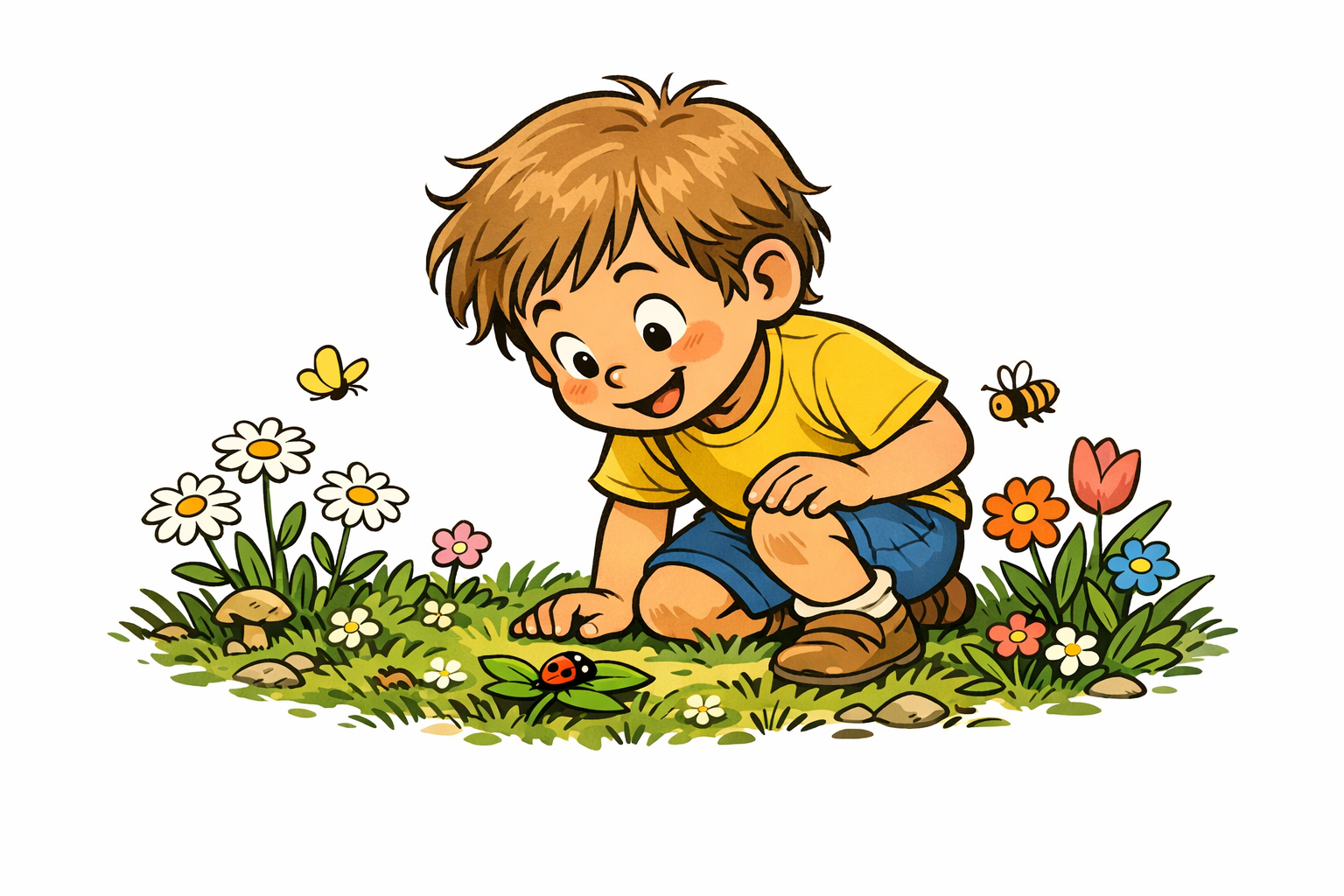
A garden in which children can play, discover and relax safely does not just happen on its own. Many parents ask themselves: Where do I start, what is really important - and how does it all fit into our limited space? In this guide, you will learn how to plan your garden step by step in a child-friendly way, avoid safety traps and at the same time create a place where the whole family can consciously experience nature.
Table of contents ▼
- Safe play equipment in the garden: location, surface, materials
- Age-appropriate garden design for children
- Experience nature: How children learn in the garden
- Retreats and secret places in the garden
- How do I plan a child-friendly garden? Step by step
- Decisions and typical garden design mistakes
- Conclusion: How to turn your garden into a family oasis
- Frequently asked questions about child-friendly gardens
- Plan play equipment with sufficient safety clearance, soft ground and high-quality, weatherproof materials.
- Set up zones for different age groups instead of turning the whole garden into a playground.
- Use the garden as a place to learn about the seasons, plants and animals - with flower beds, water points and observation corners.
- Create at least one sheltered retreat for children that can be used all year round and remains easily visible.
Safe play equipment in the garden: location, surface, materials
For play equipment to be safe in the garden, it needs to be sufficiently far away from walls, fences and windows, a fall-absorbing surface (e.g. grass, wood chips or fall protection mats) and stable, weatherproof materials. Wood should be well processed and free of splinters, metal should be protected against corrosion. Regular checks for loose screws, cracks and tripping hazards are mandatory - especially after winter and heavy storms.
When choosing a location, it is worth considering both the sun and the neighbors. A play tower right on the property boundary can quickly lead to noise conflicts, while a slide in the blazing midday sun in July is hardly ever used. An easily visible corner with morning or late afternoon sun, where you have visual contact from the house or seating area, is ideal.
Robust wooden constructions have proven themselves for garden play equipment. They are pleasantly warm to the touch, blend in better with the garden and can be repaired or repainted years later if necessary. Make sure that the posts are solid, the fasteners rustproof and - especially important in Switzerland - that they are firmly anchored to the ground so that gusts of wind or winter storms do not loosen the tower.
If you want to combine different pieces of equipment, it helps to take a look at well-assorted garden play equipment categories. There you can see how much space play towers, swings or sandboxes actually need and which age specifications are realistic.
Age-appropriate garden design for children
A child-friendly garden is geared towards your children's stage of development: toddlers primarily need safe, ground-level activities and lots of company, while kindergarten children want to climb, carry and experiment, and primary school children are looking for places to retreat to, real challenges and "their own projects". Instead of buying everything at once, it's worth having a garden concept that grows with the child and replaces or adds to individual elements over the years.
Toddlers (approx. 1-3 years): explore safely
For the youngest children, safety comes first. Suitable features include low platforms, short slides with wide edges, a sand area and firm paths where children can try their first attempts at cycling. Water should only be used in very small quantities and always supervised, for example with a shallow bowl on the floor. Poisonous plants at reach height, thorny hedges and loose stones have no place in this zone.
Kindergarten children (approx. 3-6 years): climbing, rolling, building
Now children want to climb, balance and play role-playing games. A compact play tower with a slide, a swing, a large sandpit or a mud kitchen offer plenty of opportunities. The important thing here is: The height and level of difficulty should be challenging, but not overwhelming. Instead of a very high tower, it sometimes makes more sense to have two smaller climbing options in different places in the urban terraced house garden.
Primary school children (approx. 6-10 years): Retreat and real challenges
School children want places where they can be "among themselves". A playhouse on stilts, a small wooden shelter or a clearly demarcated area with a hammock creates this retreat. At the same time, it can be more sporty: Climbing walls, higher horizontal bars or rope bridges keep children moving even without a screen - provided the surface remains safe and the equipment is regularly checked.
- The height of the play equipment corresponds to my children's motor skills.
- There is at least one area for quiet play (sand, reading, watching).
- Falling areas are free and soft, no hard edges in the direction of fall.
- Dangerous plants and tools are out of reach.
- The most important play area is clearly visible from the terrace or kitchen.
Zoning helps, especially when siblings play together with a large age gap: the "safe area" for the little ones at the front and a corner with more challenging equipment further back. Clear rules about which areas can only be used with supervision provide additional safety.
Experience nature: How children learn in the garden
A child-friendly garden is more than just a collection of play equipment. Here, children experience the seasons, weather, plants and animals first-hand - and learn to take responsibility along the way. Even a small bed, a few berry bushes or a herb trough on the balcony are enough for children to see how a seed becomes a plant and when snails, bees or ladybugs drop by.
If possible, plan a "wild corner" where leaves can be left to grow. a pile of dead wood or an insect hotel. Such areas do not have to be large, but should remain undisturbed all year round. Children can observe there, keep research notebooks or carry out small nature projects - ideal even on rather gray days when the rest of the garden is less inviting.
Water also plays an important role: a shallow bowl as a bird bath, an old trivet with stones for insects or - if there is enough space and a secure environment - a small pond that is consistently supervised. In the Swiss climate, it is worth placing such elements in such a way that they are not damaged by roof avalanches or snow banks in winter.
In summer, on the other hand, the nature zone needs some shade so that leaves don't burn and children can take short observation breaks outside even on hot days. A semi-shaded area under a tree or a pergola with climbing plants is ideal for this.
Create a "garden year poster" together with the children: Every month, take photos or draw what has changed in the garden. In this way, children become sensitive to the seasons, weather and growth - even if the garden is small.
If you want to take a more structured approach to observing, you can use an overview of seasonal fruit and vegetables as a guide. This allows children to link what they see in the garden with what is fresh at the market at the same time - a bowl of strawberries in June becomes a little aha experience that is lost in the frozen goods from the supermarket.
If space is limited, nature experiences can also be organized vertically: Berry bushes in tubs, climbing beans on the balcony railing, a small worm bin for composting kitchen waste. The decisive factor is not the surface area, but that children are regularly allowed to help shape the garden and take on responsibility.
Retreats and secret places in the garden
Children not only need action, but also sheltered corners where they can read, whisper, daydream or retreat for a while. A secret place in the garden works well if it is "a little hidden" for children, but still easily visible for adults. Small wooden playhouses, a low shelter or a simple structure made of posts and fabric that protects from the wind and prying eyes are ideal.
Wooden shelters have an additional advantage in the Swiss climate: they can also be used in rain, light breezes or in winter, when metal structures are uncomfortably cold. Make sure that the roof construction is solid and that snow can slide off safely. A dry wooden floor or pallets protect against ground moisture and create a clearly defined space.
The children's perspective helps with the furnishings: seat cushions, a box for books or disguises, perhaps a small lantern with LED light - that's all you need. It is important that the space remains flexible: What is the "pirate's cave" for the five-year-old child may later become a reading spot or meeting place with friends for the eight-year-old.
How do I plan a child-friendly garden? Step by step
A child-friendly garden is successful if you first clarify how your family really uses the outdoor space, then define meaningful zones and only finally select specific play equipment. Start with a simple sketch, roughly measure the available space and take into account neighbors, light incidence and winter operation. This will help you avoid making the wrong purchase and create a garden that will grow with you over the years.
Make a note of what is important to children and adults: space to run, quiet corner to read, vegetable patch, barbecue area. Prioritize three main wishes together and record which play equipment is essential and which is "nice to have".
Sketch the garden with the house, paths, trees and neighboring boundaries. Roughly measure which areas are freely available, where there is sun and shade and where noise is less of a nuisance. Mark obstacles such as cellar shafts, roof avalanche zones or steep slopes.
Divide the garden into functional areas: active play zone, nature and discovery area, retreat areas, seating or dining area. Plan paths in between so that children can move freely without constantly running across flower beds or the neighbor's driveway.
Choose play equipment that suits the age of your children, the space available and the safety requirements. Give preference to sturdy wooden structures, weatherproof screw connections and non-slip surfaces. Check whether combinations (e.g. play tower with swings) make better use of your space than individual pieces of equipment.
Allow for generous fall zones around the swing and slide and plan a soft surface of grass, wood chips or fall protection mats. Avoid hard edges, walls and glass surfaces in the direction of fall and think about safe access for smaller children.
Don't implement everything at once. Start with the most important elements, observe how the garden is used for a season and then make adjustments. This allows you to make targeted investments and avoid corners that are hardly ever played on later.
With play towers in particular, it is worth comparing different sizes and platform heights in order to find a model that suits your garden and the age of your children, rather than just making a decision based on appearance.
Decisions and typical mistakes in garden design
Many problems arise because play equipment is too big, too high or in the wrong place. The entire garden often becomes a "playground", leaving adults with nowhere to retreat to. Conversely, a single, very dominant tower in a small terraced house garden can be visually overwhelming and trigger conflicts with neighbors.
A larger play tower is particularly useful if you have enough space for safety clearances, there are children of nursery or primary school age in the household and the tower can be used over the long term. It is unsuitable if the garden is very narrow, has large differences in height or the distance to the neighbor's terrace is minimal - in this case, play options close to the ground are the better choice.
For families in apartment buildings with a communal garden, a combination of a smaller tower, a shared sand zone and clear usage rules may be more sensible than several individual units. On large properties, on the other hand, it is worth investing in a versatile climbing and play system that remains attractive even with visiting children or across several age groups.
A common mistake is to only consider the summer when planning. Also think about winter maintenance (snow load, roof avalanches), dark seasons (lighting, visibility) and wet transitional periods when unsuitable surfaces can become extremely slippery.
Consider the following for every purchase: Will this element be used intensively for at least two, preferably three years? If there is any doubt, a more flexible solution - such as a medium-height play tower with modular attachments - is usually the more sustainable choice.
Conclusion: How to turn your garden into a family oasis
Start with a clear priority: safety and age-appropriate features first, visual appeal and extras second. Plan the garden in zones, combine robust play equipment with nature and retreat areas and opt for a few high-quality elements that will grow with your children. Observe for a season what is actually used and then adapt your concept accordingly - this will gradually create a garden in which children can play, discover and consciously experience nature.