


Build your own horizontal bar: Joy of movement for children in the Swiss garden
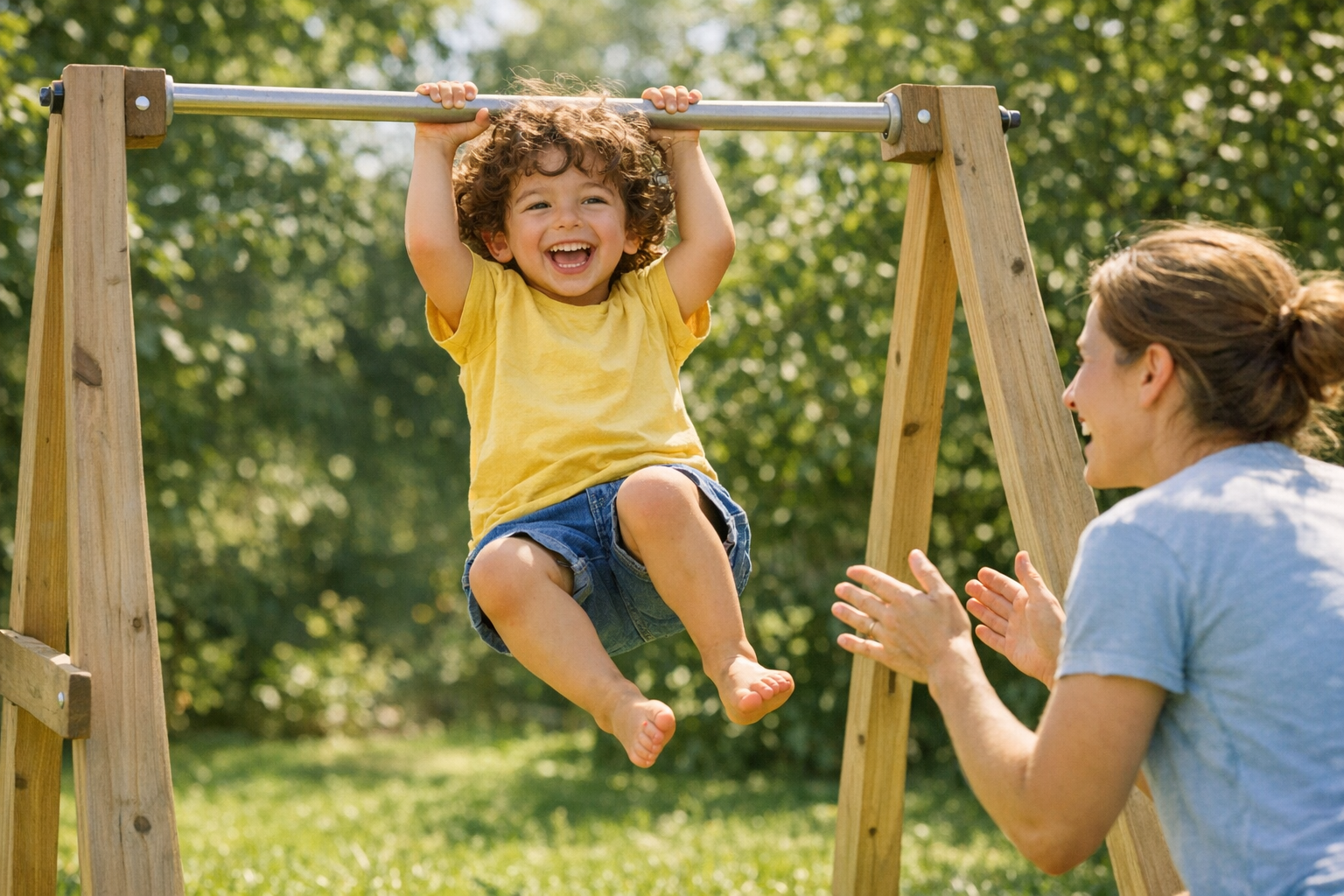
For many children, having their own horizontal bar in the garden is their first step into the world of climbing, gymnastics and acrobatic feats. At the same time, Swiss parents are faced with very practical questions: what height is right for my child, how do I attach the posts securely to the ground and what materials can withstand our climate? In this guide, we take you step by step from planning to the finished horizontal bar - tried and tested, safety-conscious and suitable for a typical family garden.
Table of contents ▼
- Planning: Which horizontal bar is right for your garden?
- Material and safety in the Swiss garden
- Build your own horizontal bar: Step-by-step instructions
- Avoid typical mistakes when building a horizontal bar
- Decision: build it yourself or use a ready-made system?
- Care and maintenance throughout the year
- Conclusion: How to turn the horizontal bar into a family project
- Frequently asked questions about horizontal bars in the garden
- Plan the height and distance of the horizontal bar according to the age, size and courage of your child - start lower and increase it later.
- Use robust wooden posts (e.g. Douglas fir or impregnated spruce) and a high-quality stainless steel pole that is screwed to the side.
- Foundations with concrete and frost-proof depth (at least 60-80 cm) ensure stability in the Swiss climate.
- A shock-absorbing surface (lawn, fall protection gravel, wood chippings) and regular maintenance of all connections are required under the bar.
Planning: Which horizontal bar is right for your garden?
The right horizontal bar for your garden will be a success if it suits your child, the space available and the parents' safety requirements. For pre-school children, lower bars (around the child's chest height) make more sense, while school children benefit from a second, higher step. It is important to have a clear area all around, no wall edges or metal fences close to the head and sufficient space to fall so that a fall does not immediately end in a laceration.
Optimal height and distance for different age groups
As a rough guide, you can remember the following: For children aged around 3-5 years, the horizontal bar should ideally be at shoulder to chest height, i.e. usually between 90 and 110 cm. For children aged 6-10 years, 120-150 cm is usual, for older children and teenagers 160-200 cm. You should allow at least 120 cm between two bars or posts so that there is enough space for hanging, swings and possibly a sibling.
- At least 2 × 3 m free area without hard edges or sharp objects
- Sufficient distance from walls, hedges, metal fences and garden furniture
- Ground can be used as fall protection or adapted (lawn, gravel, chaff)
- Access possible from all sides to reach children quickly in an emergency
- Neighbourhood law clarified (noise, visibility, boundary distances depending on canton/commune)
- Expansion options: Space for additional poles, rings or a small climbing wall
If you have several children of different ages, it is often worth combining a lower and a higher pole - either next to each other or integrated into a larger climbing frame. This way, the play equipment grows with the family and remains attractive for years to come.
Material and safety in the Swiss garden
Pressure-impregnated spruce or Douglas fir for the posts and a solid stainless steel pole are suitable for a safe horizontal bar in the Swiss garden. Wood is warm, blends in visually with the garden and is easy to work with. Stainless steel does not rust, remains functional even after winters with snow and is hygienic. Look out for rounded edges, child-proof screw connections and a construction that can withstand a swinging schoolchild.
Recommended materials and dimensions
Cross-sections of at least 9 × 9 cm have proven to be suitable for posts, or 11 × 11 cm for free-standing systems. The pole should be made of stainless steel, have a diameter of at least 30 mm and have a strong wall thickness. Thin DIY store poles bend quickly and become uncomfortable to hold. Screws, brackets and post caps should be galvanized or made of stainless steel to prevent rust problems after just a few years.
If you prefer to work with a tested system, you can purchase a ready-made stainless steel horizontal bar with matching posts from a specialist store and only need to create the foundations. This saves planning time, provides tried-and-tested dimensions and makes it easier to expand into a complete climbing frame at a later date.
In addition to the materials, the ground plays a key role. Turf is usually acceptable for lower poles, as long as the ground is not rock-hard. For higher horizontal bars or daring children, fall protection gravel or wood chippings are a clear advantage. Plan at least 1.5 m safety clearance to the front and back, ideally 2 m, so that children have enough space when making swings.
Build your own horizontal bar: Step-by-step instructions
Skilled parents can build a simple horizontal bar themselves in a weekend. It is important to plan the position carefully, lay sufficiently deep foundations and ensure a stable connection between the posts and the bar. Allow half a day for excavation and concrete work and a further half day for assembly and fine alignment. For safety reasons, children should not be in the working area when concreting and drilling.
Measure the available space in the garden, mark the post positions with wooden pegs and determine the height based on the child's height. Check the distance to walls and fences and simulate swings with a broomstick to identify side obstacles.
Dig a hole approx. 30-35 cm in diameter and 60-80 cm deep for each post. In higher locations or with soft soil, it may be deeper. The soil at the bottom of the hole is compacted and a thin layer of gravel provides drainage and stability.
Place the posts in the holes, align them exactly parallel using a spirit level and spacer bar and fix them temporarily with battens. Pour in concrete, compact it in layers and check the alignment again until everything is firmly set.
Mark the desired height on both posts and drill holes of the appropriate diameter for the pole or for the mounting brackets. Push the pole through or mount it with stable brackets, tighten all screws firmly and secure them with nuts and washers.
Once the concrete has hardened, remove the auxiliary slats, round off the edges, fit post caps and check all connections. Add fall protection gravel or wood chippings or loosen the turf so that the surface has a shock-absorbing effect.
Allow at least two, preferably three days drying time between concreting and using the horizontal bar - especially in cool or damp weather. Only when the concrete has completely hardened should a child put full weight on the bar and try out swings.
Avoid typical mistakes when building a horizontal bar
Many problems do not arise in the choice of material, but in the details of the construction: foundations that are too shallow, wobbly posts or a bar that rusts after the first few winters. Tripping hazards in the surrounding area are also underestimated, for example concrete edges, garden slabs or a wall directly behind the drop zone. If you recognize and correct these mistakes early on, you will save yourself costly repairs and unnecessary risks of injury later on.
Common planning and installation errors
Posts that are too short are a classic: if you only use 2 m posts, you will have too little height for older children after a foundation depth of 70 cm. It is better to use 2.4 or 3 m posts, depending on the desired horizontal bar height. Equally problematic is installation without a concrete foundation, only in earth or grass - this quickly leads to tilting and twisting. Drill edges and screw heads should also always be deburred cleanly and covered if necessary so that no sharp edges remain.
A horizontal bar is not a static decorative object, but is subject to dynamic loads. Children jump, swing and hang from it several at a time. It is therefore better to plan a safety reserve: stronger posts, deeper foundations, high-quality fittings and a base that cushions falls. If you are unsure, it makes sense to seek advice from experts or use tested systems.
Also often forgotten: long-term maintenance. Loose screws, weathered post heads and compacted ground increase the risk. Once a year, you should check all connections, check post caps and loosen or supplement the ground.
Decision: build it yourself or use a ready-made system?
Whether you should build a horizontal bar completely yourself or use a prefabricated system, depends on your craftsmanship, the time available and your need for safety. DIY is worthwhile if you are used to woodwork, like to plan individually and have a limited budget. Ready-made systems offer tested dimensions, often match the look of play towers and can be extended modularly.
you already have experience with concrete foundations and wooden structures, want to adapt the pole exactly to your garden situation and are prepared to take responsibility for planning and safety. DIY construction is usually cheaper, but takes more time for research, DIY store purchases and assembly.
you are looking for a tried-and-tested solution with clear assembly instructions and are possibly planning a complete climbing frame. Ready-made horizontal bars and matching play towers from specialist retailers can often be combined with other accessories and have already been tested for typical sources of faults.
If you are planning to build a larger play tower or an entire climbing landscape at a later date, it makes sense to start with a system that can be integrated into a larger facility. Inspiration for such modular solutions is provided by high-quality play towers for the garden, for example, which can be gradually expanded with additional elements.
A good starting point for checking whether a ready-made system suits your family better is a clear overview page with different play frame variants. There you can see at a glance how a horizontal bar can be sensibly integrated into a larger climbing and play concept instead of standing alone in the garden.
Care and maintenance throughout the year
A horizontal bar in a Swiss garden is exposed to sun, rain, frost and sometimes snow. To ensure that the system remains safe for years to come, it needs some attention. Wooden posts benefit from regular checks for cracks, loose screws and moisture around the base. The stainless steel pole should be free of rust, sharp-edged nicks and excessive dirt so that children's hands can get a good grip.
Annual maintenance routine for families
Once a year - ideally in spring - systematically go through the horizontal bar: Tighten all screws with a suitable wrench, check post heads and any paint, loosen the ground or add fall protection material and clean the bar with a mild detergent. If you notice any changes (increased wobbling, visible cracks, clear signs of rust on fittings), act immediately and restrict use of the equipment until the problem has been resolved.
Conclusion: How to turn the horizontal bar into a family project
Start with proper planning: suitable height, sufficient space and a clear decision as to whether self-assembly or a system solution suits your family better. Invest in solid posts, a high-quality stainless steel pole and sufficiently deep foundations - these are the safety-relevant building blocks. Involve the children in designing the surroundings (spreading fall protection gravel, decorating flower boxes), but not in the construction work. If you also maintain the horizontal bar annually, it will turn from a one-off project into a long-term exercise area that will give your children joy and self-confidence.